IBAS’s Jim Cremin reflects on a new website designed to provide at-a-glace comparison between the differing rules of leading sports betting providers.
IBAS Approached by Rule-Comparison Initiative
read more


By Kevin Pullein
You Are The Ref was a comic strip devised by the artist Paul Trevillion. I met him once when he drew for a magazine I wrote for. Great fun, as I recall.
Each episode of You Are The Ref illustrated something that could happen in a match and asked the reader to imagine they held the whistle in their hand. What decision would they give? Afterwards they were told what decision they should have given.
Here in a similar spirit I will discuss five things not everyone knows about the laws of football and the corresponding rules of betting. Misunderstandings about them cause disputes. We hear from people who have lost when they thought they had won. There are other people we do not hear from who will have won, and some of those might have thought they had lost.
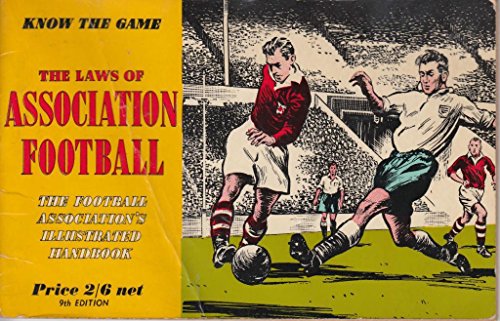
Law 9 of the 2025-26 edition of the Laws of the Game says: “The ball is out of play when it has wholly passed over the goal line or touchline on the ground or in the air.”
The goal lines and touchlines are part of the pitch so the ball must go beyond them to be out of play. It must go wholly beyond them. “All of the ball must be over all of the line” is a phrase that is sometimes used. If the ball is in contact with the line, or covers any part of the line, it is in play.
Law 1 in a section called field markings says: “These lines belong to the areas of which they are boundaries.” The lines at the side and front of the penalty area belong to the penalty area. If a defender fouls an attacker on one of those lines, the referee should award a penalty, not a free kick. If a player shoots when the ball is on one of those lines, their shot was from inside the penalty area. A bet that required the shot to be from outside the area has lost. But a bet that required the shot to be from inside the area has won.
The referee blows for a foul but afterwards a player kicks the ball and it goes in the net. Does this count as a goal? Everyone knows that it does not.
A player kicks the ball and it goes in the net but afterwards an assistant raises their flag and the referee blows for an earlier offside. Does this count as a goal? Everyone knows that it does not.
What if a player kicks the ball and it does not go in the net then afterwards the referee whistles for an earlier infringement? Does the kick count as a shot? Not everyone understands that it does not. If it could not have counted as a goal, it cannot be counted as a shot.
The ball is dead from the moment the referee whistles – or, retrospectively, from the moment they should have whistled. A player cannot score when the ball is dead, so they cannot shoot, or do a number of other things – concede a free kick, for instance. Law 8 says: “If an offence occurs when the ball is not in play, this does not change how play is restarted.” A player can be shown a card, though. At any moment, whether the ball is alive or dead, a player can be cautioned or sent off.
Law 8 also says: “A kick-off starts both halves of a match, both halves of extra time and restarts play after a goal has been scored. Free kicks, penalty kicks, throw-ins, goal kicks and corner kicks are other restarts.”
If play does not restart, there has not been a free kick, throw-in, goal kick… or corner kick. (The referee must always add time for a penalty kick to be taken.) You can bet on all these things but for some reason we only seem to hear complaints about corners. Perhaps it is because there are fewer corners than throw-ins, free kicks or goal kicks and one either way is more often the difference between a bet winning and losing.
Near the end of a half the ball will sometimes go out of play for what would have been a corner if the referee had not looked at their watch and whistled for the end of the half instead. Law 17 on the corner kick says: “The ball is in play when it is kicked and clearly moves.” If the ball is not kicked and does not clearly move, there has not been a corner.
It would be unfair to tell someone who had bet on a low number of corners that they have lost because the bookmaker has counted as a corner something that was not a corner. It would also be unfair, therefore, to make the bookmaker pay somebody else’s bet on a high number of corners as if a thing that was not a corner was a corner.
Nothing that happens afterwards is included in bets on the match.
It is not unknown for scuffles between players to break out after the full-time whistle, and for the referee to show yellow or red cards.
Law 12 says: “The referee has the authority to take disciplinary action from entering the field of play for the pre-match inspection until leaving the field of play after the match ends.”
A person asking for payment on cards shown after a match has ended will sometimes say that they count toward future suspensions. They do. There are two types of cards that count toward future suspensions: those shown during a match and those shown after a match. Cards shown after a match are not included in bets on how many cards would be shown during the match.
Law 10 says:
“The team scoring the greater number of goals is the winner. If both teams score no goals or an equal number of goals, the match is drawn.
“When competition rules require a winning team after a drawn match or home-and-away-tie, the only permitted procedures to determine the winning team are: away goals rule, two equal periods of extra time not exceeding 15 minutes each, penalties.”
So extra time and penalties are not part of a match but tiebreak procedures that can be used afterwards in knockout competitions if nobody has won over one or two legs but somebody must progress to the next round or be presented with the trophy.
Some bets include extra time or penalty shoot-outs – and they come with a clear statement that they do. Any other bets do not. Not infrequently, bets win or lose only because the rules of betting are consistent with the laws of football.
IBAS’s Jim Cremin reflects on a new website designed to provide at-a-glace comparison between the differing rules of leading sports betting providers.
IBAS Panel Member Kevin Pullein reflects on how the dramatic twist to the 2025/26 Championship play-offs affected three clubs and many more bettors.