IBAS’s Jim Cremin reflects on a new website designed to provide at-a-glace comparison between the differing rules of leading sports betting providers.
IBAS Approached by Rule-Comparison Initiative
read more


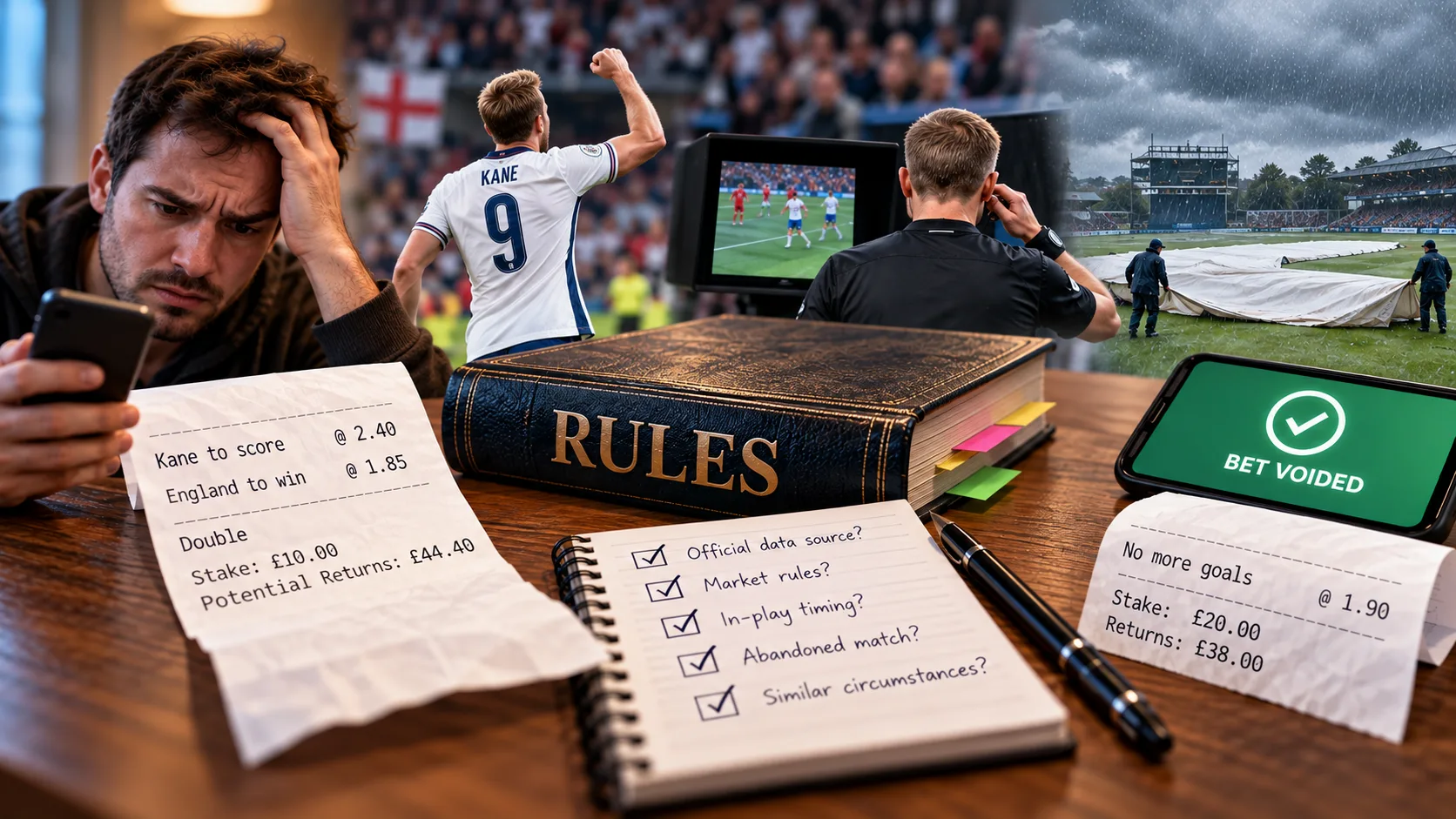
By Kevin Pullein
It cuts both ways. A rule that can work against you can also work for you.
We receive complaints from people who say that a bookmaker has relied on small print. The print may or may not be small. Businesses are supposed to highlight terms that might surprise their customers. Most football betting rules would not surprise most football bettors. They say things that are not unreasonable.
They must be applied in all circumstances, though (unless they are deemed unfair).
I have yet to hear of a situation in which I felt a bookmaker had deliberately ignored a rule to avoid paying a bet. But I have come across situations in which a bookmaker did not know their rules. It is only to be expected, now and again.
Practices can change imperceptibly over time, without anyone realising. When I was growing up there was a story told of a wartime message passed by word of mouth along a chain of messengers. It started out as: “Send reinforcements we’re going to advance.” It ended up as: “Send three and fourpence we’re going to a dance.” Three and fourpence was pre-decimal currency.
Bookmakers have lots of rules. The traders who settle bets, or operate the software that does, may not have been involved in writing the rules. Or they might have replaced those who were.
A woman complained to us about a bet that was settled as lost with data from Opta. She said Opta were wrong and the right information had been published by the competition organisers. The bookmaker said they always settle on Opta, right or wrong. Their rules said they should not. Their rules said explicitly that some markets should be settled on Opta and implicitly that others should be settled on the competition organisers. The customer had bet in one of the others. We said she should be paid.
Another bookmaker had a rule saying bets would be settled on information from the competition organisers or the Press Association. If there was a disagreement between them, it said, precedence would be given to the Press Association.
The bookmaker was rather taken aback when we pointed this out to them. They said they always settled on the competition organisers, and did not even have access to data from the Press Association. They rewrote their rule straight away. This was good and proper. But we said the new rule should apply only to new bets. The bet a customer was disputing should be settled according to the old rule. He had cited different stats. The rule said that in the final analysis bets should be settled on the Press Association.
As it happens, the Press Association on this occasion agreed with the competition organisers. The point was that we had to make sure the bet had been settled correctly according to the relevant rule.
Most bookmakers have a rule saying in-play bets will be cancelled if they are accepted by mistake after a goal that either determines or significantly influences the outcome.
Usually we receive complaints from people whose bets have been scrubbed out. They say they did not know a goal had been scored and we say unfortunately it does not matter – the goal had been scored and the rule requires the bet to be cancelled.
Recently we heard from someone who said his bet should have been cancelled but was not. He had bet on no more goals. He thought but could not prove that another goal had been scored by the time his bet had been accepted. We were able to establish that it had. The bookmaker then agreed to cancel the bet. A rule that voids bets which otherwise would have won also voids bets which otherwise would have lost.
The principle applies to all sports, not just football.
A little while ago I was involved in deliberations on a disputed cricket bet. A man had bet on whether a match would be completed. There were two options, Yes and No. The man had backed Yes. The bookmaker settled the bet as lost because the match had been abandoned. Their market rules said the outcome would be No if a match was abandoned. However, their rules also said that if a match was abandoned for any reason other than bad weather bets would be cancelled. The customer argued that this match was. We were persuaded that he was right, and, when presented with the same evidence, so was the bookmaker. They refunded the customer’s stake.
Bets should be settled with rules intended for the purpose. A bookmaker who does not have a rule to cover the precise circumstances will sometimes use a rule that covers what they consider to be similar circumstances. We say this is acceptable so long as it produces an outcome that we feel is fair. Sometimes it does not. On those occasions we take into account the procedures of other bookmakers and, ultimately, our own sense of what is just.
Rules are rules – unless there are not.
IBAS’s Jim Cremin reflects on a new website designed to provide at-a-glace comparison between the differing rules of leading sports betting providers.
IBAS Panel Member Kevin Pullein reflects on how the dramatic twist to the 2025/26 Championship play-offs affected three clubs and many more bettors.